Elasticsearch
is an open-source, distributed, real-time search and analytics engine written in Java.
It can be
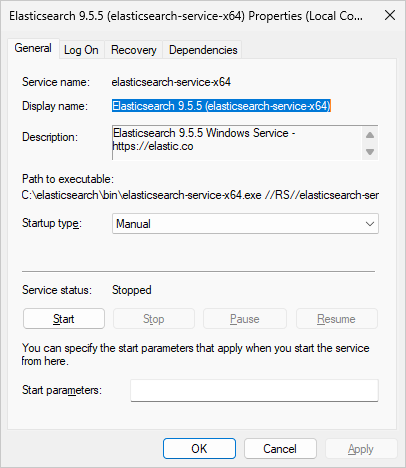
installed as a Windows Service,
to start automatically at boot:
But running as a service may not be enough. What happens if the service crashes? Or if someone accidentally shuts it down?
A watchdog like Service Protector will jump in to quickly handle those unwelcome interruptions.
This guide show how to monitor Elasticsearch 24/7. It should take less than 3 minutes to put everything in place.
To keep Elasticsearch running with Service Protector:
-
Download and install Service Protector, if necessary.
-
Start Service Protector.
-
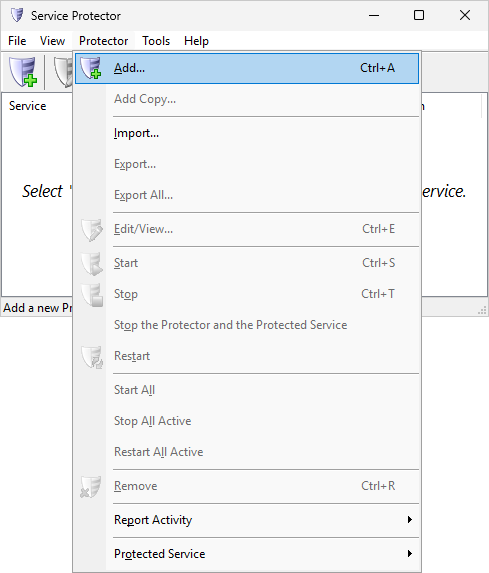
Select Protector > Add to open the Add Protector window:
-
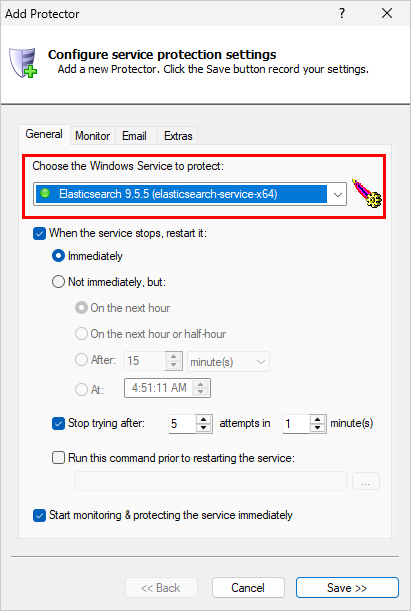
On the General tab, select the Elasticsearch service from the Service to protect pull-down list at the top.
Since we installed Elasticsearch 9.5.5 on our 64-bit Windows Server 2025 machine, this is called:
Elasticsearch 9.5.5 (elasticsearch-service-x64)
Your service should be named similarly, and
you'll notice a green circle on the left if Elasticsearch is already running:
-
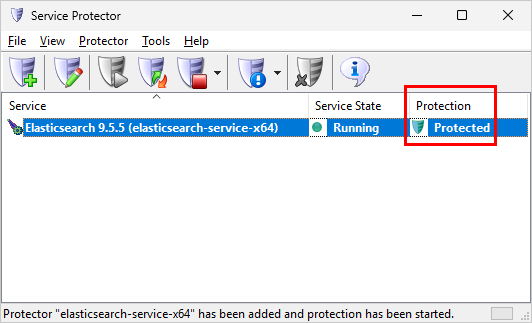
Click the Save button. In a couple of seconds, an entry for Elasticsearch will show up in the Service Protector window.
At this point, Elasticsearch is actively monitored and protected by Service Protector:
Click the green shield icon to see a few details about the protection.
-
That's it! Whenever your computer boots, Elasticsearch will start and Service Protector will begin monitoring the
service to promptly restart it if it fails, crashes or stops for any reason.
We encourage you to edit your Elasticsearch entry in Service Protector and review the many other settings that could help in your environment.
For example, send an email when the service fails, restart Elasticsearch every night to keep the service responsive, and much more.
Trouble protecting the Elasticsearch Windows Service?
From Service Protector, select Protector > Report Activity > Today to bring up an HTML report detailing the interaction between Service Protector and Elasticsearch.
Browse the Service Protector FAQ for answers to commonly asked questions and troubleshooting tips.
Contact us and we will be happy to help!