|
How to Keep Microsoft IIS Running 24/7 with Service Protector |
Automatically restart the IIS Windows Service whenever it crashes or encounters an error serving pages. Schedule a nightly restart, guard against memory leaks and keep your web sites operating smoothly
Last Updated on October 4, 2026
Microsoft's popular Internet Information Services (IIS) web server
provides the foundation for many Windows-based web applications. It's deployed as a Windows Service, as shown here in
services.msc:
Deploying as a service allows IIS to start automatically after a reboot, but it doesn't protect against crashes, hangs, and other interruptions.
That's where Service Protector can help.
To protect the IIS Windows Service with Service Protector:
-
Download and install Service Protector, if necessary.
-
Start Service Protector.
-
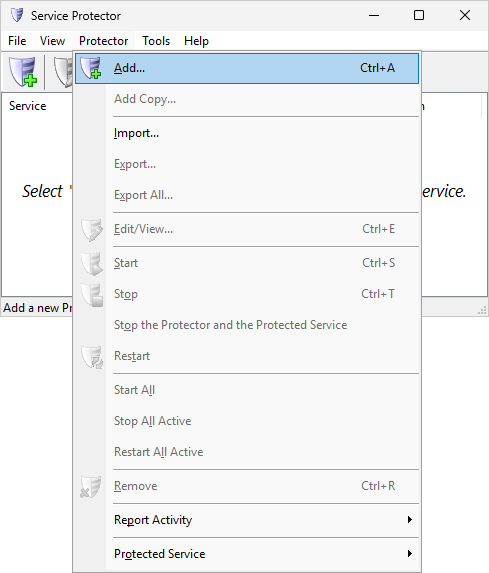
Select Protector > Add to open the Add Protector window:
-
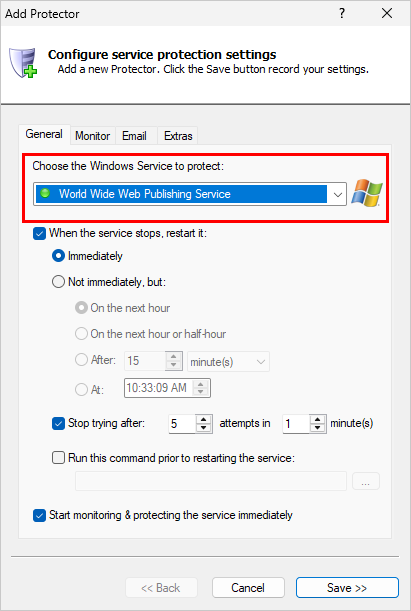
On the General tab:
-
In the Service to protect dropdown, choose the IIS service, named World Wide Web Publishing Service.
You will notice a green circle on the left if the service is already running, as pictured here:
-
Next, let's set up a web server health check.
With that in place, Service Protector will restart IIS if errors out.
-
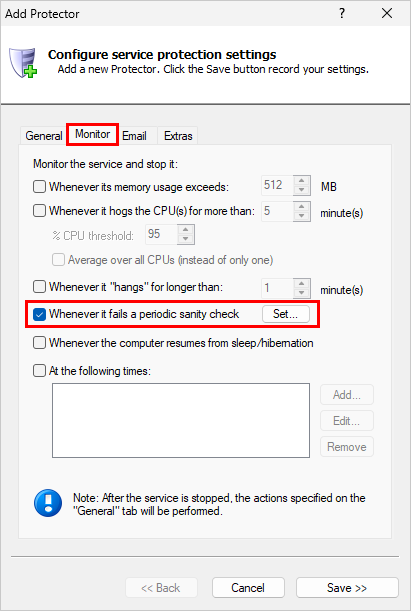
Switch to the Monitor tab. Check the Whenever it fails a periodic sanity check box and click the Set button:
-
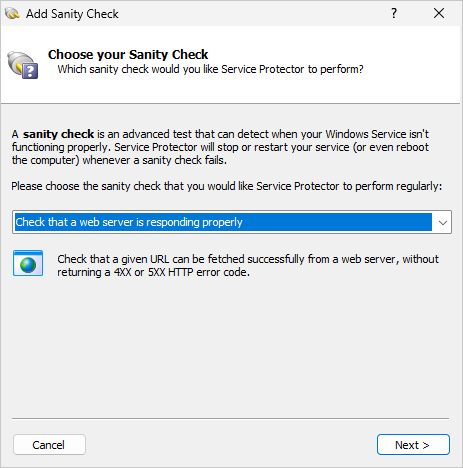
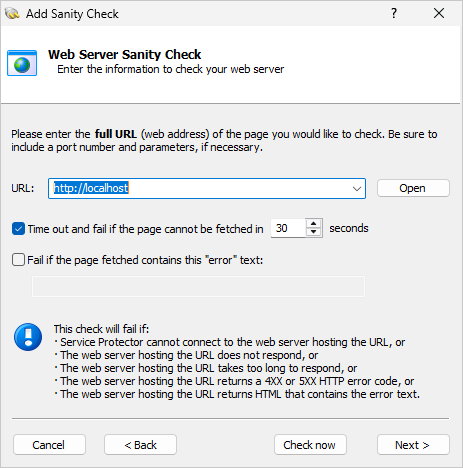
In the Add Sanity Check window, select the Check that a web server is responding properly
option and click Next to proceed:
-
Enter the URL that Service Protector should monitor. It can be any URL you like that works from a browser:
Click Next to continue.
-
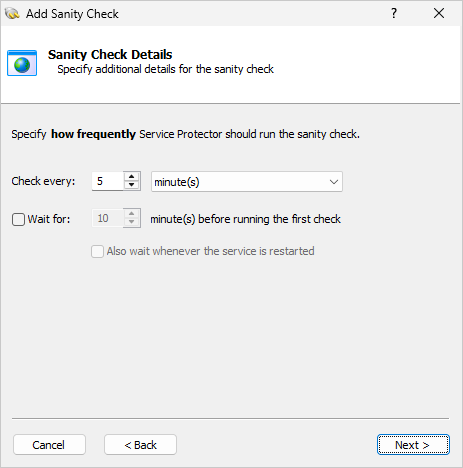
On this page, tell Service Protector how often to fetch the URL.
The default of every 5 minutes should be fine but you can check more frequently if you like.
After you're done, click Next to move on:
-
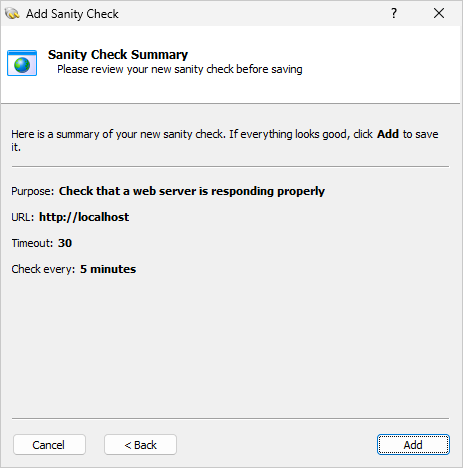
And finally, confirm your settings:
If everything looks good, click Add
to record your new sanity check and return to the Monitor tab.
-
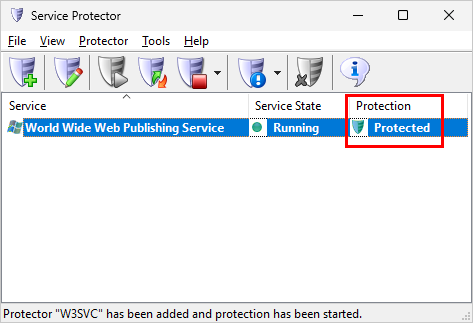
Click the Save button. In a couple of seconds, an entry for IIS will show up in the Service Protector window.
It's already being monitored by Service Protector:
-
That's it! Next time your computer boots, IIS will start as normal and Service Protector will begin monitoring IIS to promptly restart it if it fails.
We encourage you to edit IIS in Service Protector and check out the many other settings that may be appropriate for your environment.
For example, send an email when the service fails, restart IIS during the wee hours to keep performance snappy,
restart IIS if it hogs the CPU and much more.
Trouble protecting the IIS Windows Service?
From Service Protector, select Protector > Report Activity > Today to bring up an HTML report detailing the interaction between Service Protector and IIS.
Browse the Service Protector FAQ for answers to commonly asked questions and troubleshooting tips. Contact us and we will be happy to help!
|
Peace of mind for your important Windows Services!
|
 |

|
Step-by-step guides for 70+ Services
|