Keep Atlassian Crowd Windows Service running 24/7

How to Keep your Atlassian Crowd Windows Service Running 24/7 with Service Protector

Automatically restart Crowd whenever it stops, crashes or fails. Ensure that your business-critical single sign-on system is always running


Last Updated on October 29, 2026

Atlassian Crowd provides centralized identity management. It supports Active Directory, LDAP, OpenLDAP, Microsoft Azure AD and others.

Crowd can be installed as a service (with Apache Tomcat), to start identity management functions automatically whenever your computer boots:


To monitor & protect the Crowd Windows Service with Service Protector:

  1. If necessary, install Crowd. Take the extra steps to configure it as a Windows Service, and make sure everything works as expected.

  2. Download and install Service Protector, if necessary.

  3. Start Service Protector.

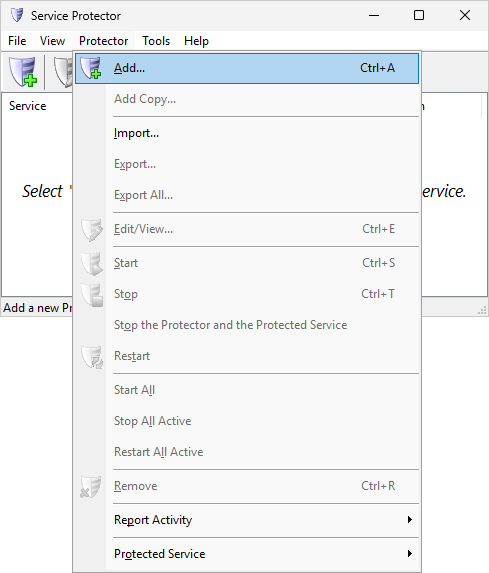
  4. Select Protector > Add to open the Add Protector window:

    Add Protector

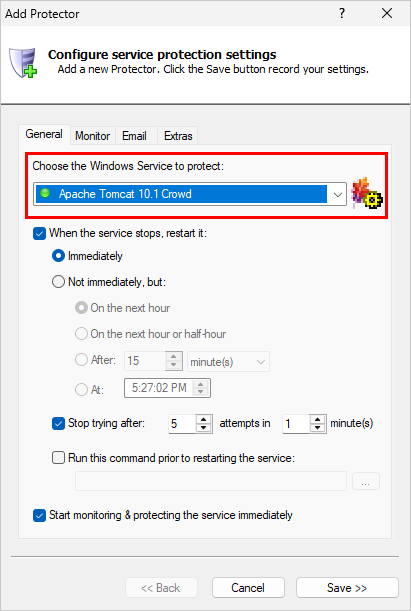
  5. On the General tab, in the Service to protect field, select the Crowd Windows Service.

    Because the service is hosted by Tomcat, look for something like Apache Tomcat 10.1 Crowd. That was the name on our system:

    Choose the Tomcat Crowd Windows Service

  6. Move to the Monitor tab.

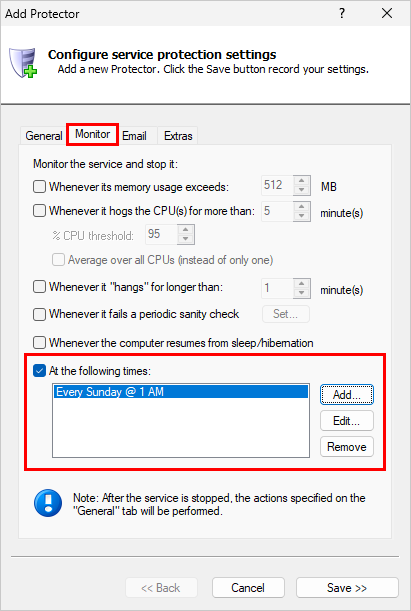
    To prevent the Tomcat JVM from accumulating too much memory and ultimately hobbling Crowd, we recommend configuring a regular restart of the service.

    You can set that up by checking the At the following times box, clicking the Add button and specifying when you want Crowd to be recycled.

    For example, you can see below that we have opted for a weekly restart, every Sunday morning at 1 AM.

    Restart the Crowd service weekly

  7. Click the Save button to record your settings and create a new entry in the Service Protector window.

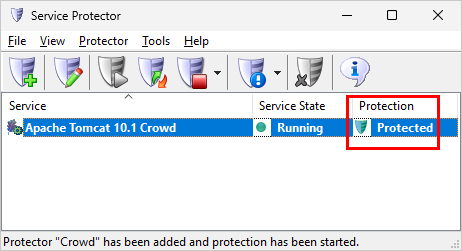
    The green shield indicates that Service Protector is already actively monitoring Crowd to detect failures:

    The Atlassian Crowd Windows Service is protected

  8. That's it! Next time your computer boots, Crowd will start automatically and Service Protector will babysit the service to promptly restart it if it terminates for any reason.

    We encourage you to edit your Crowd entry in Service Protector and browse through the many other settings that may be appropriate for your environment.

    For example, send an email when the service fails, clamp down on CPU hogging, and much more.


Trouble protecting the Crowd Windows Service?

  • From Service Protector, select Protector > Report Activity > Today to bring up an HTML report detailing the interaction between Service Protector and Crowd.

  • Browse the Service Protector FAQ for answers to commonly asked questions and troubleshooting tips.

  • Contact us and we will be happy to help!