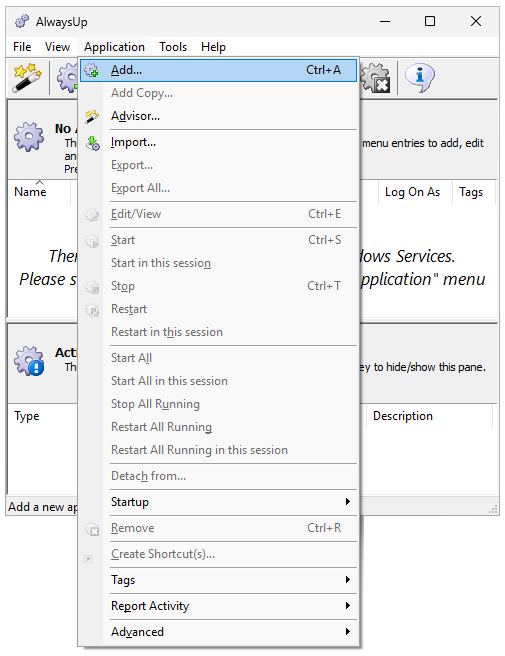
Select Application > Add to open the Add Application window:
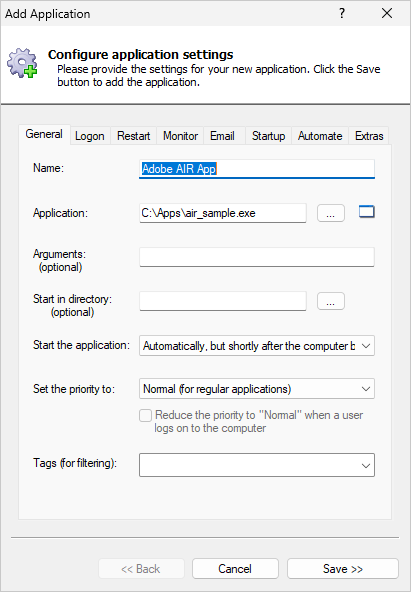
On the General tab:
In the Application field, enter the full path to your Adobe AIR executable (*.exe).
In the Start the application field, choose Automatically, but shortly after the computer boots.
With this setting, your application will start a couple of minutes after boot — after all the machine's critical
services are fully initialized.
And in the Name field, enter the name that you will call the application in AlwaysUp.
We have specified Adobe AIR App but you should enter a word or phrase more suitable for your application.
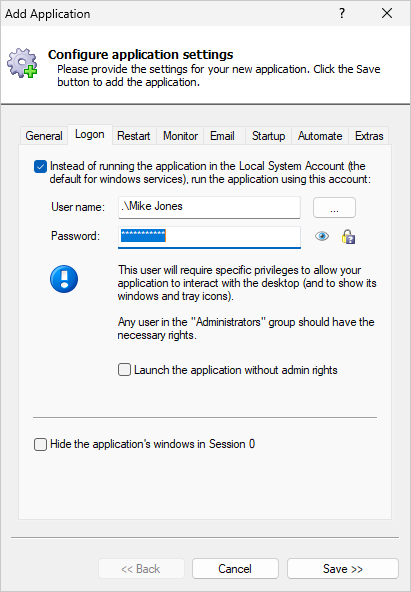
Click over to the Logon tab and enter the user name and password of the account in which you installed Adobe AIR.
The software should run in this account so that it can find its settings.
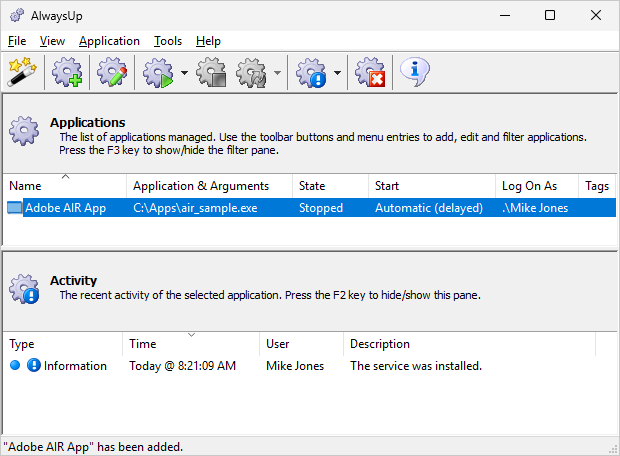
We're done setting up your app so click the Save button. In a couple of seconds, your application will show up in the AlwaysUp window.
It's not yet running though.
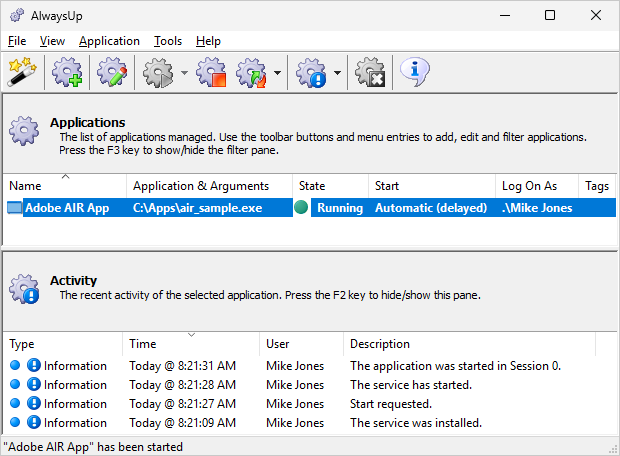
To start the application from AlwaysUp, choose Application > Start "Your Application".
After a few seconds, the "State" column should show a comforting green circle to indicate that your application has started:
If your application has a GUI, you won't see its windows because of Session 0 Isolation.
Select Application > Restart in this session to bring the app visibly onto your desktop.
That's it! Next time your computer boots, your Adobe AIR executable will start up immediately, before anyone logs on.
Feel free to edit your Adobe AIR application in AlwaysUp and check out the many other settings that may be beneficial for your environment.
For example, run a script prior to starting, send email alerts, boost priority, and much more.
Adobe AIR not working properly as a Windows Service?
Consult the AlwaysUp Troubleshooter — our online tool that can help you resolve the most common problems encountered when running an application as a Windows Service.
From AlwaysUp, select Application > Report Activity > Today to bring up an HTML report detailing the interaction between AlwaysUp and your AIR app. The AlwaysUp Event Log Messages page explains what each message means.
Browse the AlwaysUp FAQ for answers to commonly asked questions and troubleshooting tips.