-
If necessary, download and install the Sync Windows desktop app.
Be sure to enter your email and password, configure your folders to copy and make sure that Sync works as you expect.
If Sync doesn't work now, it will not magically work as a Windows Service later on.
-
Download and install AlwaysUp, if necessary.
-
Start AlwaysUp.
-
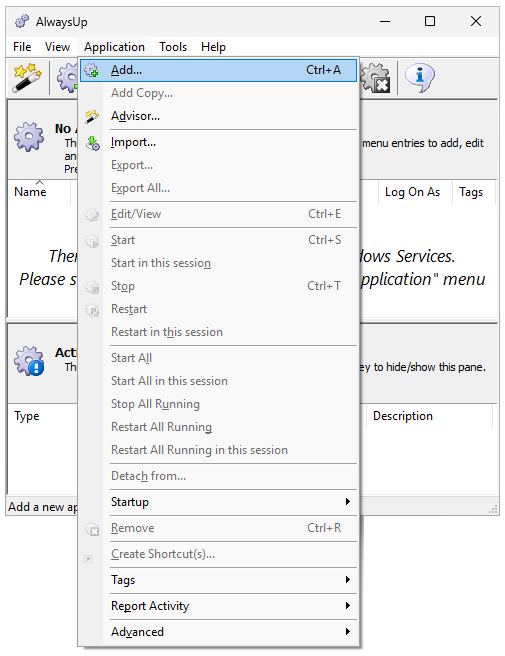
Select Application > Add to open the Add Application window:
-
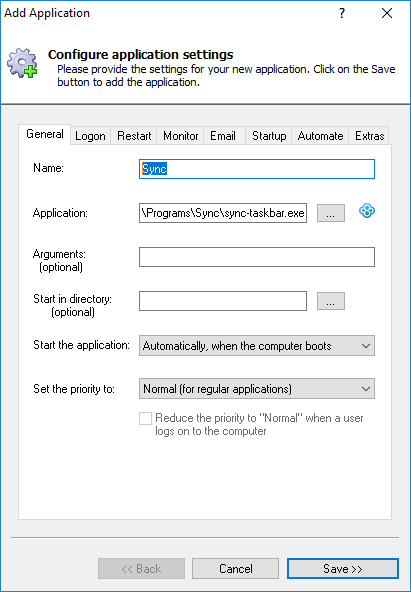
On the General tab:
-
In the Application field, enter the full path to the Sync taskbar executable, sync-taskbar.exe.
If you installed Sync in the default location, this will be:
C:\Program Files (x86)\Sync\sync-taskbar.exe
-
In the Start the application field, choose Automatically, but shortly after the computer boots.
With this setting, AlwaysUp will launch sync-taskbar.exe a couple of minutes after boot — after all the machine's critical services are
up and running.
-
In the Name field, specify a name for this application in AlwaysUp.
We went with Sync but you can stick with the default or type in a more memorable name if you like.
-
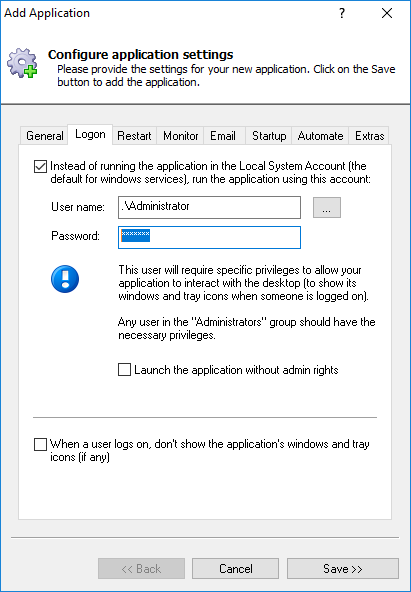
Move to the Logon tab and enter the user name and password of the windows account where Sync is installed.
Sync needs to run in that account so that it can find all the settings you have configured (such as your Sync.com email address and password).
Note #1: Don't enter the credentials for your Sync.com account here. This is the user name and password you use to log in to your computer.
Note #2: Using a brand new service account created for this tutorial will not work because Sync won't be able to find your settings/configuration.
-
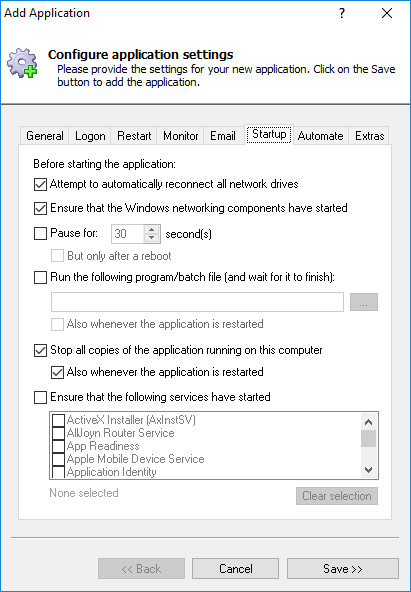
And finally, switch to the Startup tab. Check the Ensure that the Windows Networking components have started box.
This informs AlwaysUp that Sync needs the TCP/IP networking stack to do its work.
We also recommend checking the Stop all copies of this application running on this computer box and the ones below.
Those options will help AlwaysUp to "own" Sync on your computer, even if another person starts it up manually.
-
We're now done configuring Sync to run as a Windows Service, so click the Save button.
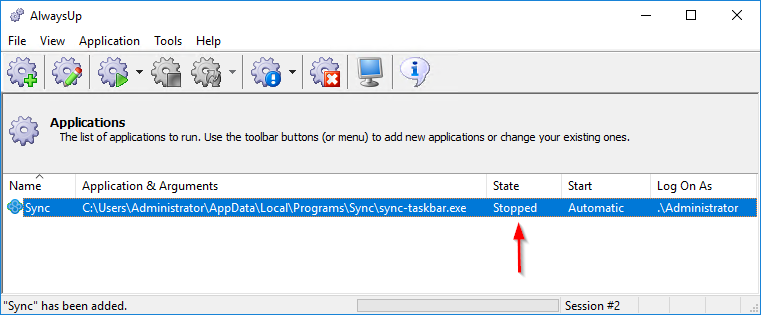
In a couple of seconds, an application called Sync Desktop (or whatever you called it) will show up in the AlwaysUp window.
It's not yet running though and the state will be "Stopped":
-
Before we launch Sync as a service, let's adjust its settings to avoid starting a second copy when you log in (which is now unnecessary). To do that:
-
If Sync is not running, start it now. You can double-click on the Sync executable in the File Explorer, in the path you specified in step #5:
-
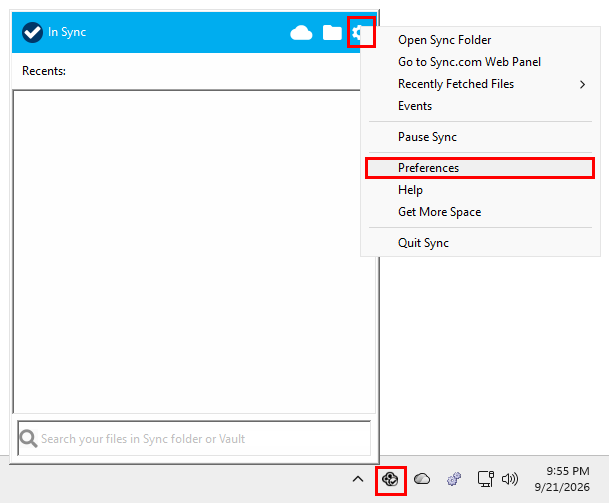
Right-click the Sync tray icon ( ),
click the gear in the upper-right, and select Preferences from the menu:
),
click the gear in the upper-right, and select Preferences from the menu:
-
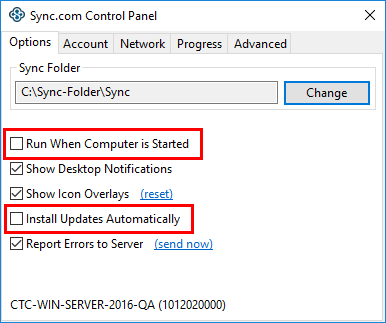
In the Sync window, un-check the Run When Computer is Started box.
And since Sync will be running under the control of AlwaysUp, un-check Show Desktop Notifications as well.
You may not be there to see them and we don't want anything holding up the action.
-
Close the window.
-
Exit Sync. Click on the tray icon, then the gear, and choose Quit Sync.
-
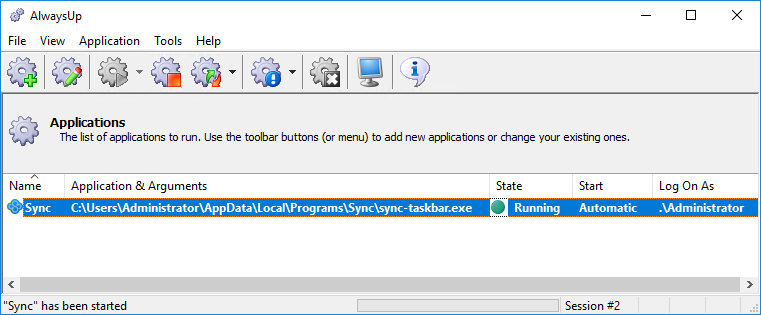
Now back to AlwaysUp. To start Sync, choose Application > Start "Sync Desktop". The state will transition to "Running" after a few seconds:
Note that Sync will be running in the background on the isolated Session 0.
Your files will be synchronized, as normal, but the Sync tray icon will not be visible on your desktop.
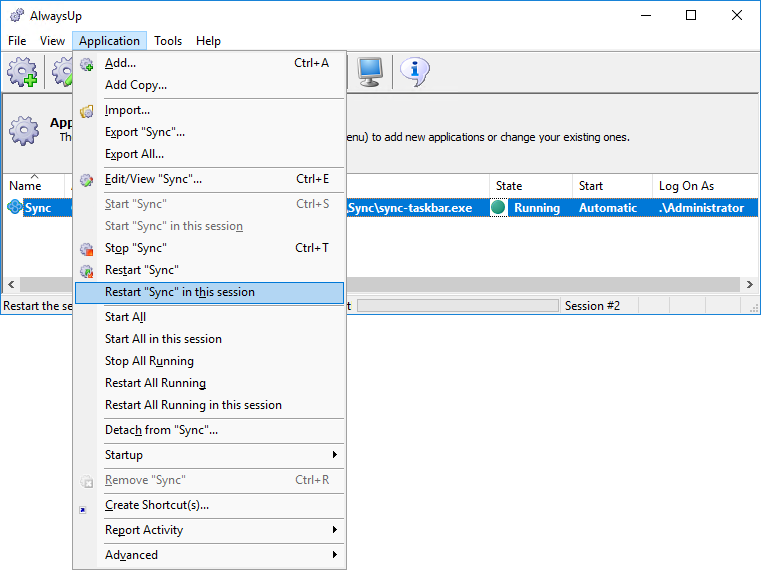
If you wish to see the Sync tray icon — maybe to change some settings or check that it is working OK — select Application > Restart "Sync" in this session:
In a few seconds, the Sync icon will appear in the task tray area allowing you to interact with the software as normal.
-
That's it! Next time your computer boots, Sync will start up immediately, before anyone logs on.
We encourage you to edit Sync in AlwaysUp and check out the many other settings that may be appropriate for your environment.
For example,
boost the program's priority to give it more CPU time,
send email alerts whenever Sync stops,
and much more.