Note: The latest versions of iTunes are distributed exclusively through the
Microsoft Store.
Unfortunately Microsoft Store applications cannot run as Windows Services.
If you want to run iTunes 24/7 as a service, you'll have to
download and install an older version of iTunes.
After that, you'll be able to follow the instructions below and start iTunes whenever your computer boots.
-
Download, install and configure a version of iTunes that works outside of the Microsoft Store.
Ensure that it operates as you expect.
-
Next, let's prepare iTunes to run unattended.
Since you won't be there to babysit the software, you want to limit those annoying dialog boxes that occasionally come up to interrupt the action.
-
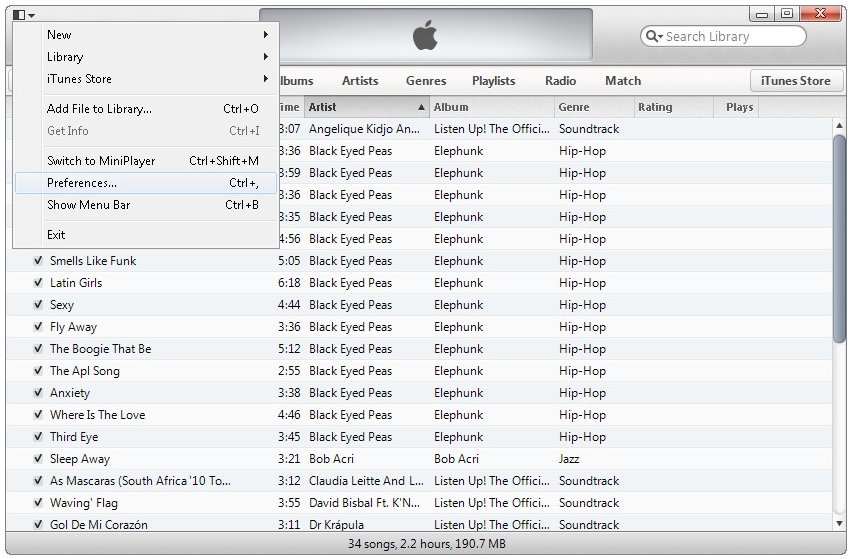
Start iTunes and select Preferences... from the System menu (the black-and-white square in the upper left corner):
-
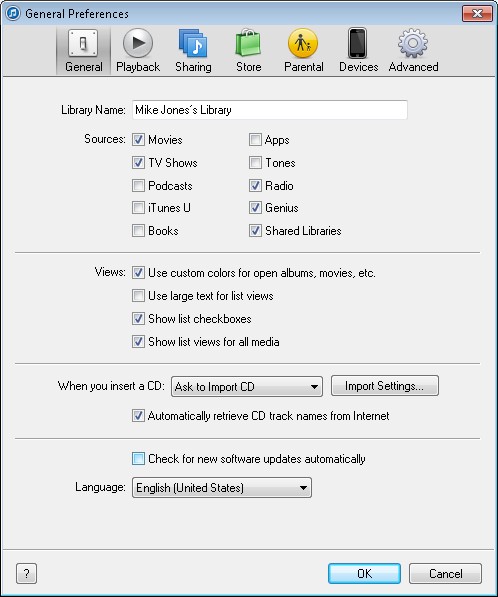
When the Preferences window comes up, uncheck Check for new software updates automatically.
-
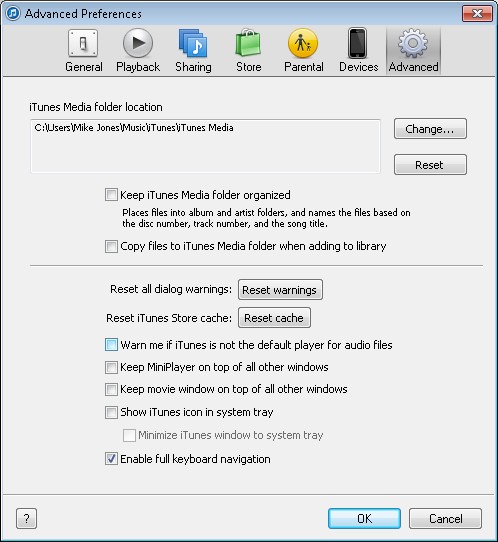
Click over to the Advanced tab and uncheck Warn me if iTunes is not the default player for audio files.
-
Click the OK button to record your changes.
-
Close iTunes.
-
Download and install AlwaysUp, if necessary.
-
Start AlwaysUp.
-
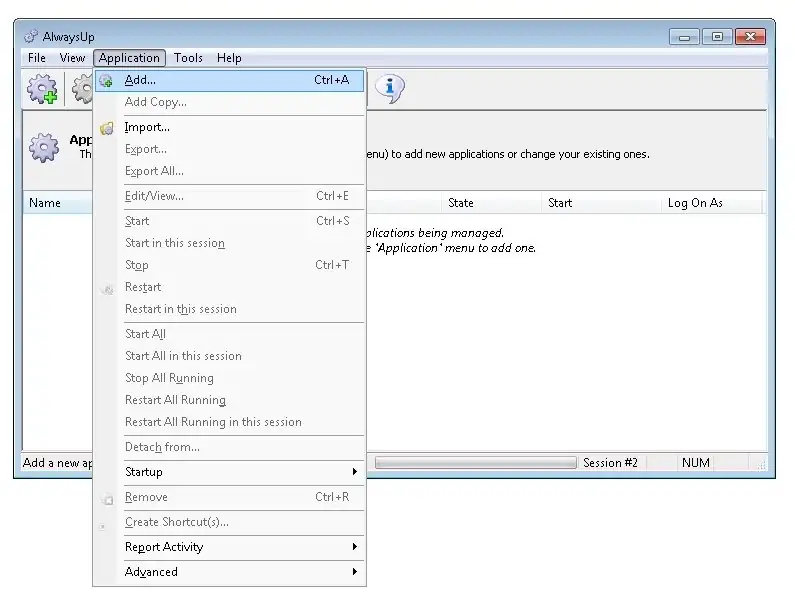
Select Application > Add to open the Add Application window:
-
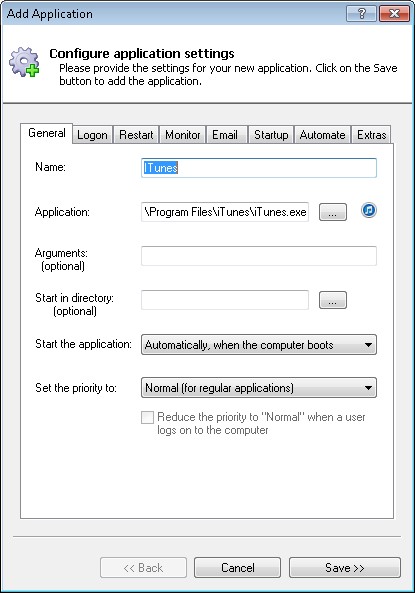
On the General tab:
-
In the Application field, enter the full path to iTunes. Unless you've customized your iTunes installation, this will probably be:
C:\Program Files\iTunes\iTunes.exe
-
In the Name field, enter the name that you will call the application in AlwaysUp.
We have been adventurous and put in iTunes but you can enter something else if you prefer.
-
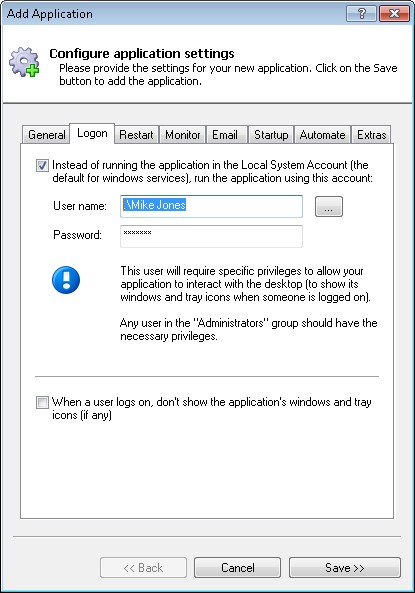
Click over to the Logon tab and enter the user name and password of the account in which you installed iTunes.
iTunes should run in this account so that it can find its settings.
-
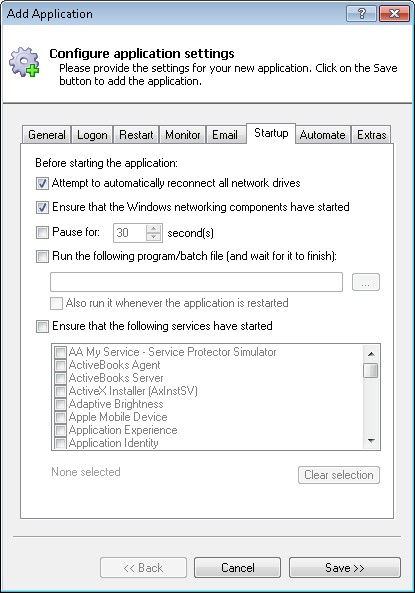
Move to the Startup tab and check the Ensure that the Windows Networking components have started box.
This prevents AlwaysUp from firing up iTunes before your PC is fully prepared.
-
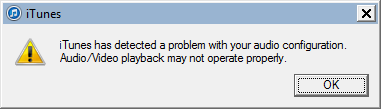
Even though we've already turned off some of the iTunes prompts, iTunes can still get hung up in the background expecting you to dismiss one of its alerts.
For example, iTunes will complain that it cannot play audio when run as a service in Session 0 and will not start serving your media until you click the OK button:
To address this and other similar problems, we have written a small
AutoIt plugin that can automatically dismiss iTunes prompts.
The simple code is here (DismissITunesPrompts.au3).
To set up the automatic dismissal of iTunes prompts:
-
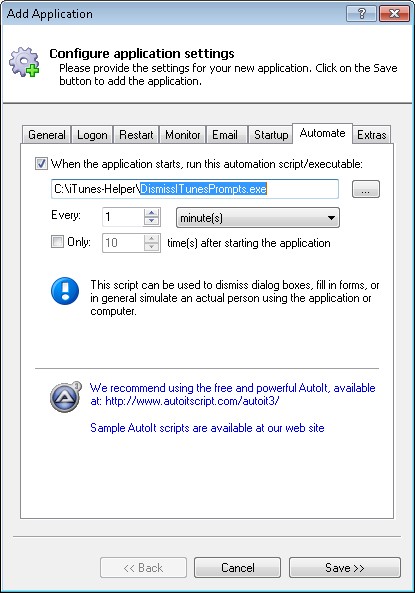
Download the standalone DismissITunesPrompts plugin executable from our web site and save it in a well-known location.
In this tutorial, we have placed it in C:\iTunes-Helper.
-
Move to the Automate tab. Check the When the application starts, run this automation script/executable box.
-
Enter the full path to the plugin executable you downloaded. We saved it as C:\iTunes-Helper\DismissITunesPrompts.exe, but you may have a different path.
-
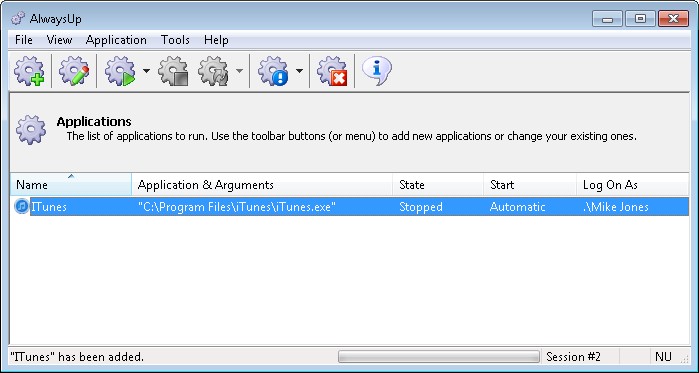
Click the Save button. In a couple of seconds, the new entry for iTunes will show up in the AlwaysUp window.
It is not yet running though.
-
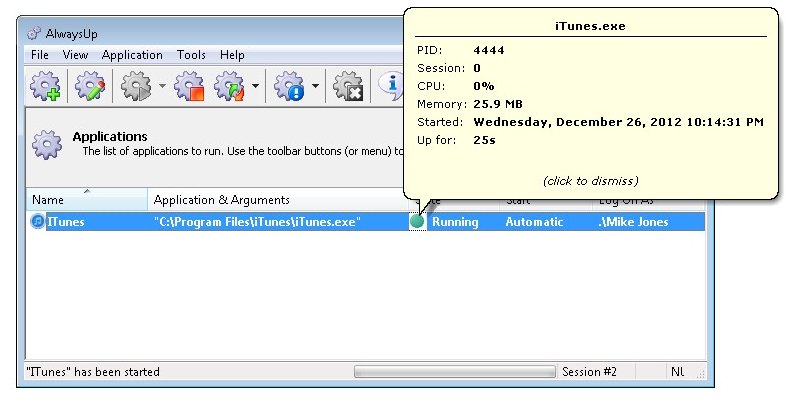
To start iTunes from AlwaysUp, choose Application > Start "iTunes". After a few seconds, the "State" column should show a green circle to indicate that iTunes has started:
Note that iTunes will be running in the background, in the
isolated Session 0.
You won't see iTunes on your desktop.
If you wish to see iTunes, select Application > Restart "iTunes" in this session.
AlwaysUp will quickly stop iTunes and restart it visibly on your desktop.
-
Now that iTunes will always be running in the background, you probably want to de-activate the iTunes helper application that "listens" for devices (such as your iPod).
We recommend using the
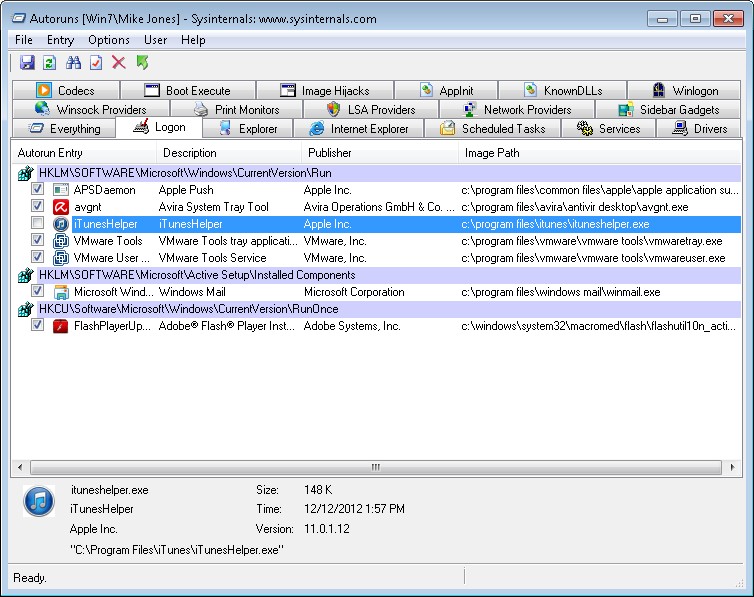
free Autoruns tool from Microsoft
to disable the iTunesHelper.exe auto-start but any "startup manager" should do the trick.
With Autoruns, click over to the Logon tab and un-check the box beside the iTunesHelper entry:
-
That's it! Next time your computer boots, iTunes will start up before anyone logs on.
Feel free to edit iTunes in AlwaysUp and check out the many other settings that may be beneficial for your environment.
For example, run a script prior to starting, send email alerts, boost priority, and much more.