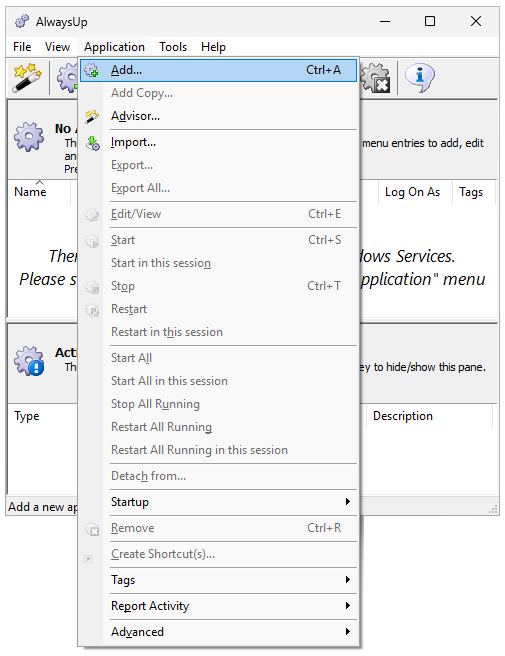
Select Application > Add to open the Add Application window:
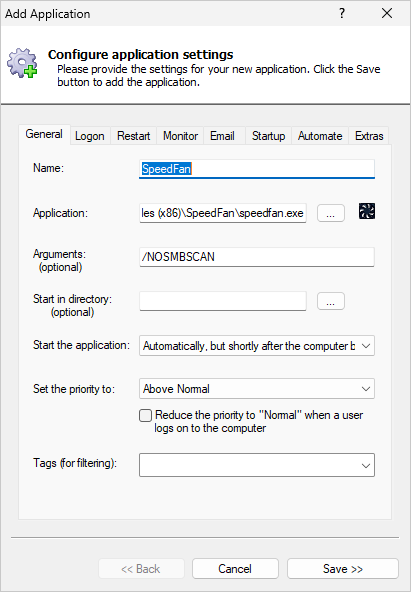
On the General tab:
In the Application field, enter the full path to the SpeedFan executable, speedfan.exe.
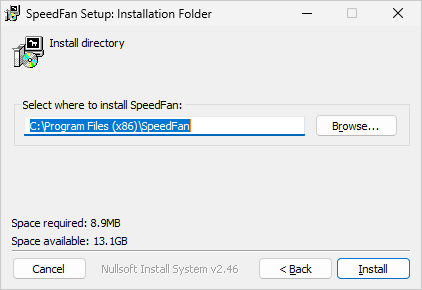
If you installed SpeedFan in the default location, this will be:
C:\Program Files (x86)\SpeedFan\speedfan.exe
In the Arguments field, enter /NOSMBSCAN.
That option prevented SpeedFan from scanning the SMBus and hanging when it started on our server, so we recommend it for you too.
In the Set the priority to field, choose Above Normal.
It's not required but bumping that up from the default will cause Windows to allocate SpeedFan a few extra CPU cycles, and that may be better on slower hardware.
And finally, in the Name field, enter the name that you will call the application in AlwaysUp.
We went with SpeedFan but you can specify something else if you like.
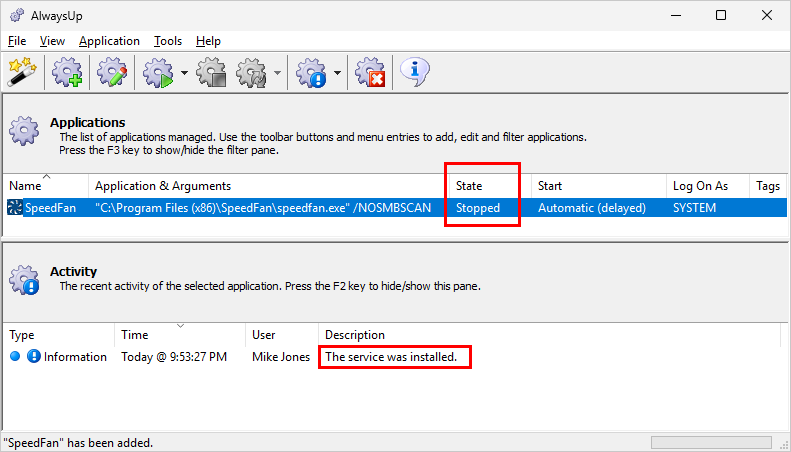
Click the Save button. In a couple of seconds, an application called SpeedFan will show up in the AlwaysUp window.
It's not yet running though:
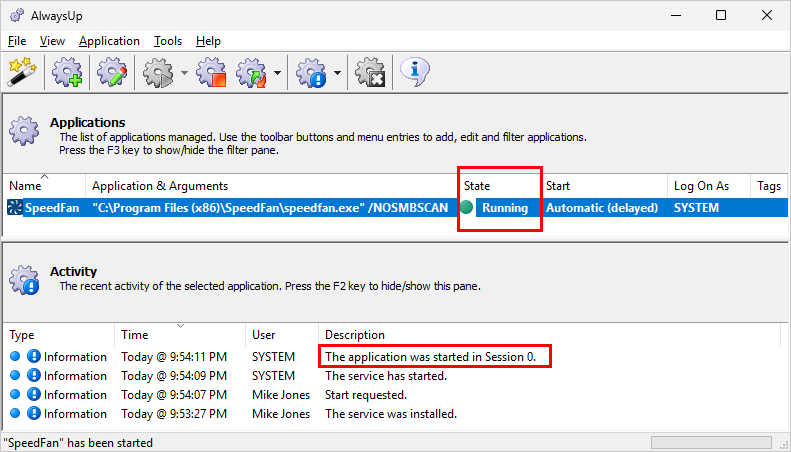
To start SpeedFan from AlwaysUp, choose Application > Start "SpeedFan". The state will change to "Running":
Note that SpeedFan will be running in the background, in the
isolated Session 0.
You won't see it on your desktop.
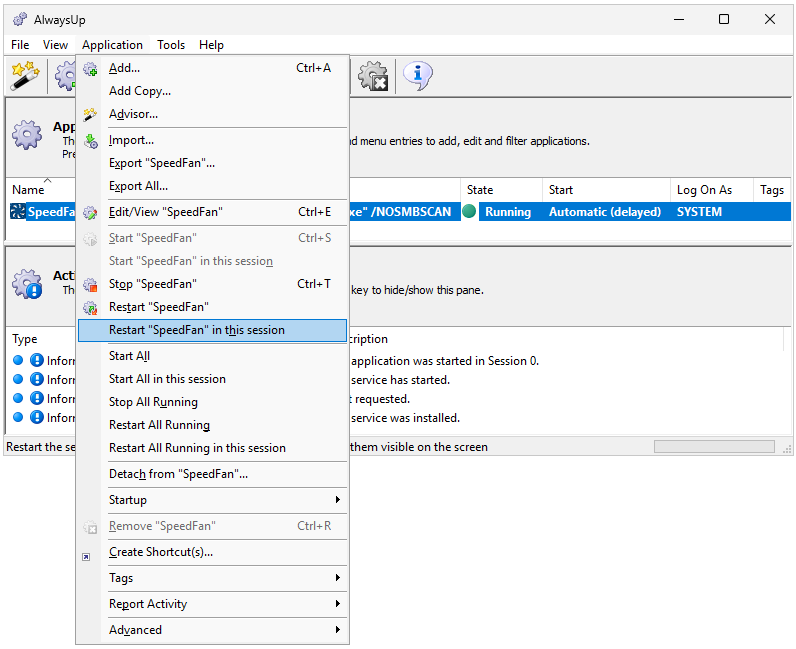
If you need to see SpeedFan, choose
Application > Restart "SpeedFan" in this session
to stop it in Session 0 and re-run it visibly on your desktop:
That's it! Next time your computer boots, SpeedFan will start up immediately, without anyone needing to log on.
Please restart your machine now and test that SpeedFan works as expected after Windows comes back to life.
And please feel free to edit SpeedFan in AlwaysUp to check out the many other settings that may be appropriate for your environment.
SpeedFan not working properly as a Windows Service?
Consult the AlwaysUp Troubleshooter — our online tool that can help you resolve the most common problems encountered when running an application as a Windows Service.
From AlwaysUp, select Application > Report Activity > Today to bring up an HTML report detailing the interaction between AlwaysUp and SpeedFan. The AlwaysUp Event Log Messages page explains what each message means.
Browse the AlwaysUp FAQ for answers to commonly asked questions and troubleshooting tips.